
THE GIST
Europe's biggest airline is sounding the alarm. If jet fuel supplies tighten this summer, Ryanair says it may have to cancel flights. What looks like a commodity story is quickly turning into a capacity story, with knock-on effects for fares, tourism, and airline profits.
WHAT HAPPENED
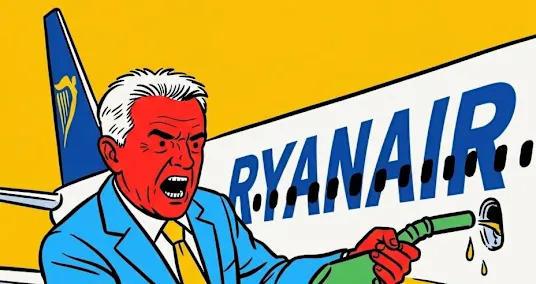
Michael O'Leary, Ryanair's famously unfiltered CEO, has delivered the kind of blunt warning he tends to specialize in. If fuel supply risks materialize in June, July, or August, airlines will have to start cutting flights.
This is not hypothetical.
The war involving Iran has disrupted one of the most critical arteries in global energy markets: the Strait of Hormuz. Roughly a fifth of the world's oil normally flows through that corridor. With supply routes under pressure, jet fuel markets have tightened sharply.
Prices have surged. Jet fuel recently traded around $195 per barrel, more than double last year's levels, reflecting both supply disruption and the kind of panic buying that tends to make supply disruptions worse. Oil itself has been volatile, with Brent briefly pushing above $100 before pulling back on hopes of a shorter conflict.
But for airlines, price is only half the story.
Ryanair has hedged about 80% of its fuel needs through March next year at roughly $67 per barrel. That gives it a buffer against rising costs in the short term. Many competitors are less protected, leaving margins exposed.
The bigger concern is physical availability.
Speaking to Sky News, O'Leary flagged that up to 10% to 20% of jet fuel supply could be at risk this summer if the conflict drags on. That is not a marginal squeeze. That is enough to force airlines to ground aircraft or reduce schedules. He also noted that assurances from fuel suppliers only stretch to late May, and beyond that, no one is willing to commit to anything.
The UK is particularly exposed. As O'Leary told the Guardian, it relies on Kuwait for roughly a quarter of its jet fuel imports, making it more vulnerable than other European markets if Middle Eastern flows are disrupted.
So far, airlines have not made large-scale cancellations. Demand remains strong, and Ryanair still expects passenger traffic to grow about 5% in the April to June period, with fares rising modestly by 3% to 4%.
But the tone is shifting.
WHY IT MATTERS
Our analysts just identified a stock with the potential to be the next Nvidia. Tell us how you invest and we'll show you why it's our #1 pick. Tap here.
This is where the story moves from headline risk to structural stress.
latest_posts
- 1
 Are your hormones imbalanced? Doctors explain how to know if you need testing
 - 2What to know about the hepatitis B shot — and why Trump officials are targeting it
- 3She was the supermodel dubbed 'The Face' in the '80s. Joining OnlyFans in her 60s taught her a lot.
- 4Gartex Texprocess India to showcase innovations across textile ecosystem
- 5The most effective method to Comprehend the Variables Affecting Medical attendant Pay rates




- Tesla plans to expand production at German car plant
- Shrewd Home Gadgets to Save Energy
- Some super-smart dogs can pick up new words just by eavesdropping
- Arrow Exploration brings new Colombian oil well on stream ahead of schedule and under budget
- Longtime United Launch Alliance CEO Tory Bruno resigns from space company. 'Finished the mission I came to do.'
- What to know about King Charles III's cancer treatment and his message to the public
- St George Mining hits record 178m high-grade intercept at Araxá, reinforcing global scale
- The Force of Organic product: 10 Assortments That Improve Your Wellbeing
- Saturn's moon Titan may not have a buried ocean as long suspected, new study suggests