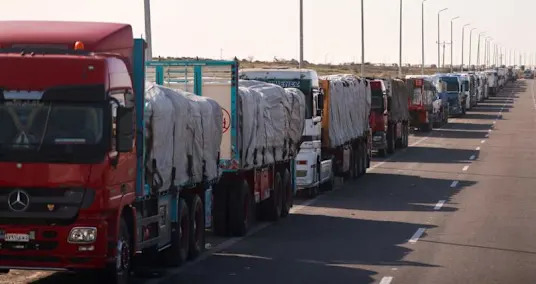
Two IDF officers and a civilian face indictments for smuggling contraband into Gaza using humanitarian aid trucks, part of a growing wartime smuggling investigation.
Military and civilian prosecutors on Tuesday filed prosecutors’ declarations ahead of indictments against two IDF officers and a civilian suspected of exploiting humanitarian aid trucks to smuggle prohibited goods into the Gaza Strip for profit, in the latest in a growing wartime cluster of Gaza-smuggling cases. According to the joint statement by the Shin Bet (Israel Security Agency), Israel Police, and the IDF, the suspects are accused of trying to move contraband into Gaza in exchange for hundreds of thousands of shekels.
Investigators allege that Nasser Abu Mustafa, a resident of Rahat, used his ties to an IDF reservist officer to examine the possibility of carrying out smuggling operations into the enclave. After the two allegedly formulated the plan, the reservist is suspected of bringing in a second officer.
IDF officers exploited their military positions
Authorities say the officers exploited their military positions and access to information about aid convoys, while Abu Mustafa hid the prohibited goods inside trucks that had broken down on the way to Gaza after arriving under the guise of repairing them. The contraband allegedly included hundreds of thousands of cigarettes and several cellular devices. Prosecutors said indictments are expected to be filed soon.
The case adds to an expanding body of wartime prosecutions centered on the movement of goods into Gaza. In February, prosecutors filed indictments against 12 Israelis accused of helping smuggle millions of shekels’ worth of goods into the Strip during the war, including cigarettes, mobile phones, batteries, vehicle parts, communication cables and electrical equipment, in a scheme prosecutors said strengthened Hamas economically.
In March, prosecutors filed another indictment against four defendants accused of repeatedly attempting to move prohibited goods into Gaza outside the authorized inspection and transfer mechanism, including cigarettes, cellphones, solar panels, batteries, generators, and computers.

This affair, based on the material now public, does not appear to be part of the recent Iran-linked espionage investigations.
Still, it emerges against a broader wartime backdrop in which Israeli security agencies have been dealing at once with two separate patterns: internal smuggling cases involving alleged profiteering through Gaza supply routes, and a distinct wave of Iran-linked espionage probes involving Israelis suspected of carrying out tasks for Iranian actors. Just this week, limited publication was allowed in a separate security case involving suspects alleged to have provided services to Iranian elements, including suspected work connected to explosive material.
latest_posts
- 1
 Treason trial of South Sudan's suspended VP is further eroding peace deal, UN experts say
 - 2US healthcare spending soars to over $5 trillion in 2024
- 3Taste the World: Five Food sources That Have Dazzled Worldwide Palates
- 4December's overlooked meteor shower peaks next week — will the Ursids surprise us?
- 5FBI arrests Brian Cole Jr. in Jan. 6 pipe bomb investigation, ending 5-year hunt


- Black Friday streaming deals 2025: Grab the Disney+ Hulu bundle for only $5 and save over 60%
- Syria rejects forced deportations from Germany amid migration debate
- U.K. blocks Kanye West from entering Britain to headline now canceled festival: What led to the ban
- Turkey's Erdogan denounces Israel-Greece-Cyprus trilateral summit, affirms support for Gaza
- Exploring Being a parent: A Survey of \Bits of knowledge and Guidance for Guardians\ Nurturing Book
- Most loved VR Game for Wellness: Which Keeps You Dynamic?
- A trip to Colombia in my 20s turned into 8 years freelancing in South America. Here's what I'd do differently.
- This Flashy Old-School Design Trend From Italy Still Has A Place In Modern Kitchens
- ICAS calls for clearer safeguards in FRC’s TCA policy